

Last week I drove out to Healdsburg on a beautiful morning, took a left and meandered through the vineyards and trees to visit a new community supported agriculture (CSA) farm I’d heard about.
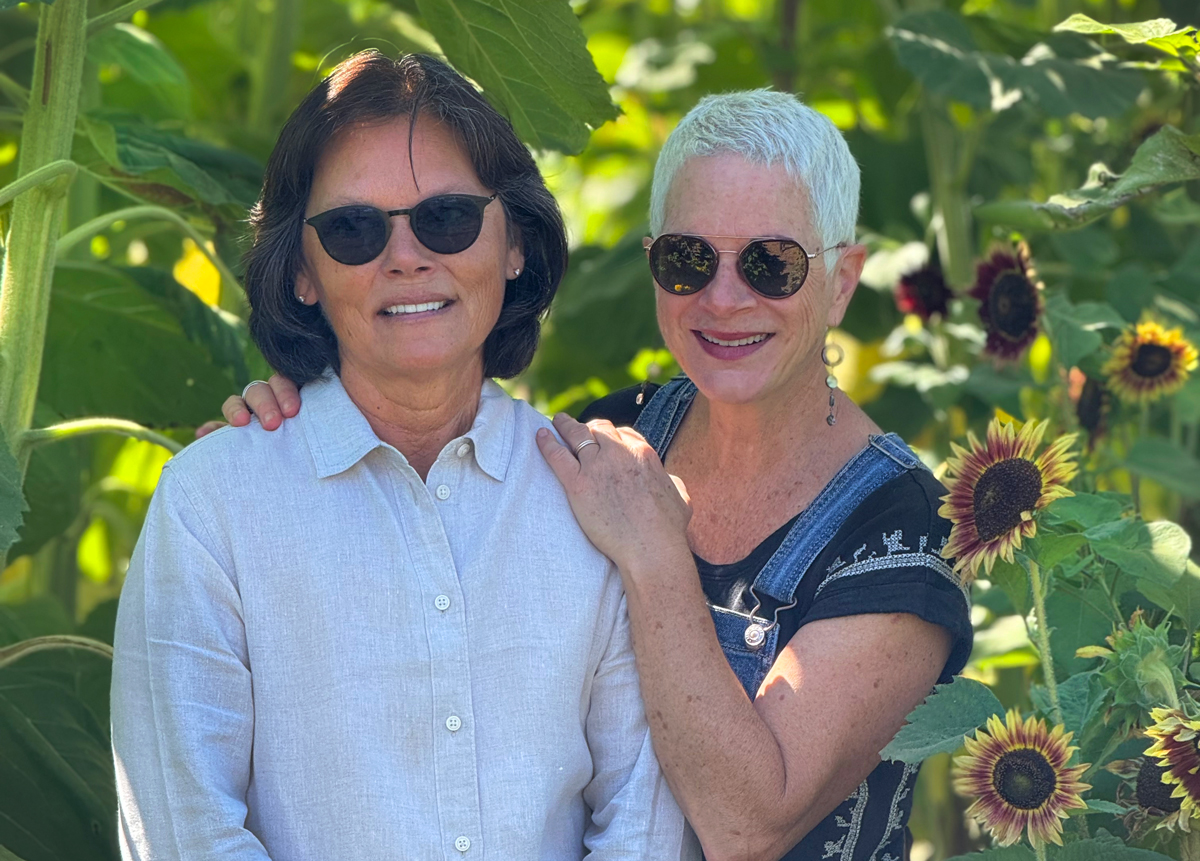
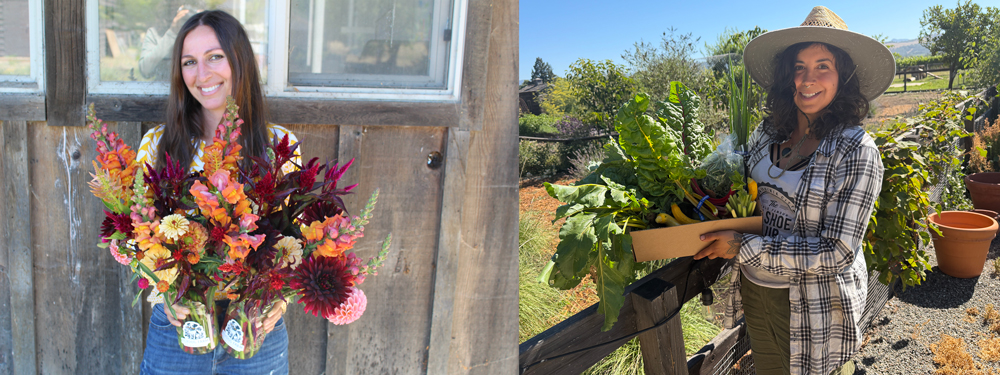
When I arrived at FlyDog Farm, I was taken on an enthusiastic tour of the farm by the founders, Grace Lucero and Bonnie Kline, along with their vegetable production and operations manager Aliya Benudiz, and flower specialist Naia Koobatian. Each of the women brings a different expertise to the farm; together, they’re restoring depleted soil while building a farm rooted in ecological stewardship and local food access. As we all wandered the sections of vegetables and flowers, they explained their goal.
“We hope it becomes a thriving, self-sustaining ecosystem filled with abundance—a place where plants, pollinators, wildlife, and people all flourish together,” says Kline.
FlyDog Farm is part of a growing movement of small farms practicing regenerative agriculture. The small, woman-owned operation just opened its new CSA and farmstand this week. On these ten acres in Healdsburg’s Dry Creek Valley, what was once a vineyard is slowly becoming something entirely different. Rows of vegetables mingle with marigolds. Medicinal herbs grow alongside pumpkins and corn. Pollinators drift through fields towards sunflowers, snapdragons, and amaranth. Birds have returned. Ladybugs are flourishing. Even cucumber beetles have their place (until they are hand-vacuumed off the vines).
“Watching this land come back to life has been incredibly rewarding,” says Kline, “grapevines have their own beauty, but seeing the explosion of colors from diverse plants—and hearing the hum of bees while watching birds and pollinators return in such a short time—has brought us enormous joy.”
Lucero and Kline weren’t always farmers but they both dreamed of farming. Lucero grew up in Modesto, CA, surrounded by agriculture and Kline spent the summers of her youth at her uncle’s Massachusetts dairy ranch near Vermont. While they haven’t quit their day jobs yet—Lucero is a top producing real estate agent in Sonoma County at The Lucero Group, Inc., under Vanguard Properties, and Kline runs Lucero Kline, Inc., their general contracting company—they found themselves inspired by the documentary The Biggest Little Farm during the pandemic. The couple slowly realized the productive garden at their Healdsburg home wasn’t enough.
“We needed more space to really farm,” Lucero says. And after searching throughout Sonoma and Mendocino Counties, they discovered ten acres planted in wine grapes.
“We came across this a couple years ago and fell madly in love and decided to make it come to fruition,” she says. “Finding this place was great because it’s still so close to town.”
Rather than replacing one monoculture with another, they’ve transformed the property one section at a time. As we walk through the landscape, Lucero and Kline point out which sections were planted first in the past two years.The first year they removed vines from the front acreage and planted vegetables and flowers. The following year they expanded farther into the property. Next comes the back acreage, along with plans for a greenhouse.
Throughout, the transformation is guided by regenerative farming—a philosophy centered on rebuilding healthy soil rather than simply extracting from it.
“We’re bringing it back to life,” says operations manager Benudiz. “The industries out here have depleted the soils, threatened wildlife and waterways, and created pressure on the ecosystem. Creating pockets like this isn’t only feeding us and feeding the community, but it’s creating a little oasis.”
Benudiz arrived at FlyDog after working with urban farming and food justice nonprofits throughout the Bay Area. A graduate of UC Berkeley in Public Health and Food Systems, she also earned a Permaculture Design Certification from Oregon State University, one of the early centers of the permaculture movement.
The results extend beyond healthier ecosystems. Emerging research suggests regenerative farming may also improve the nutritional quality of food. A 2022 study published in PeerJ found crops grown on regenerative farms contained higher levels of several vitamins, minerals, and beneficial phytochemicals than comparable conventionally grown crops, suggesting healthier soils may contribute to more nutrient-dense food.
“It’s about the quality of those plants that determines their health benefits—if they were grown with pesticides, dirty water, in mineral-depleted soils, or if they sat too long in the back of a truck from Mexico, you may not be getting any nutrition at all, or may even be exposing yourself to harmful toxins,” Benudiz explains.
FlyDog’s approach combines practical farming with ecological design. Instead of long rows of a single crop, vegetables are interplanted with flowers, herbs, and “trap crops” that intentionally attract pests away from valuable produce.
Marigolds attract ladybugs that naturally control aphids. The team hand-removes pests, vacuums cucumber beetles, and relies on composting, cover crops, drip irrigation, herbal essential oils, bird netting, and beneficial insects.
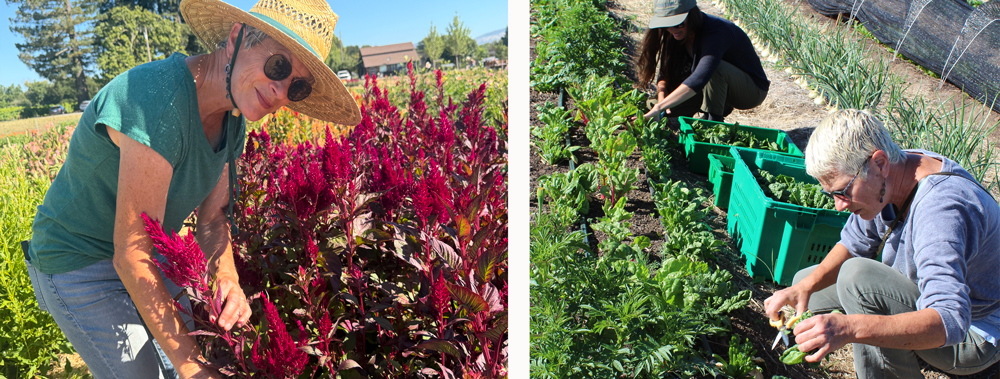
“Even the inside of a stem is a little haven for an insect,” says Koobatian, who tends the extensive floral gardens at FlyDog. She originally worked with Lucero and Kline in their general contracting company, and now manages the flower portion of the farm. “Much of my career has been rooted in the design/build world,” she says, “the shared appreciation for good design and creating beautiful spaces is what initially brought us together.”
The farm itself reflects that philosophy. Rather than rigidly controlled rows, the landscape feels alive. Volunteer plants like sunflowers and amaranth wander where they like through fields where flowers spill naturally between vegetables. “We let volunteers come up where they want,” Lucero says.
This summer marks a milestone with the launch of their CSA program and farm stand. Members visit the farm each week and select exactly what they want.
“Instead of receiving a pre-packed mystery box,” Kline says, “you visit our farm stand and choose your own items each week from what’s been freshly harvested.”
Membership options range from seasonal vegetables to flowers alone, or a combination of both. With only 25 memberships available, the CSA offers an intentionally small-scale alternative to industrial food systems. And in honor of their dogs Fly and Charli—who inspired the farm’s name—a portion of every membership also helps provide pet food to local food pantries.
After touring the farm, I left with a box overflowing with vegetables and flowers. More than the produce itself, though, was the sense of possibility. At a time when concerns about food quality, water use, and climate resilience continue to grow, farms like FlyDog offer another model—one where healthy soil, biodiversity, local food, and women-led agriculture, grow together.
“We think many women have an innate desire to nourish the people they love, and that naturally extends to growing healthy, nutrient-dense food,” says Kline. “As more resources and opportunities become available for women to enter agriculture, I think many are recognizing the urgent need to change how we farm and are stepping up to be part of that change.”
Knowing exactly who grows your food—and how it’s grown—allows consumers to make informed choices about how their food is grown—everything from water quality to pest management to regenerative growing practices.
Benudiz puts it simply, “Supporting local and small production farms is the future.”
FlyDog Farm, Healdsburg
Sign up for a CSA membership at: flydogfarmsonoma.com