
Harry Frank and the Process of the Monoprint
by Lisa Ludwigsen
The art of monoprinting is akin to watching bioluminescence, where something wondrous presents itself seemingly out of nowhere and then disappears. Monoprinting is as ephemeral as this, but miraculously, it can be captured on paper.
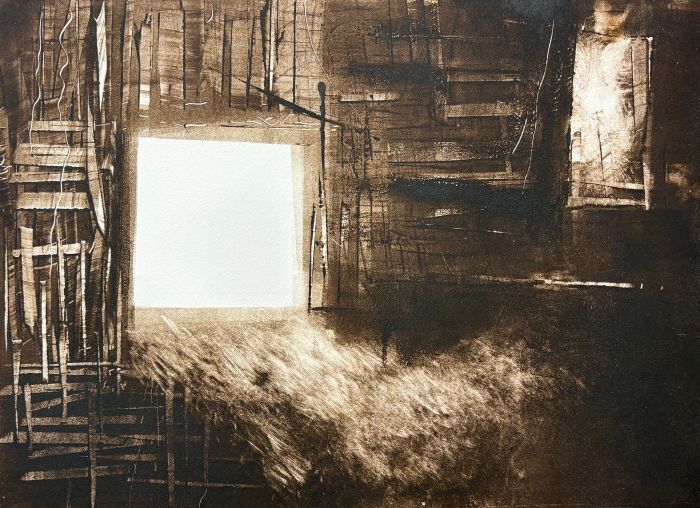
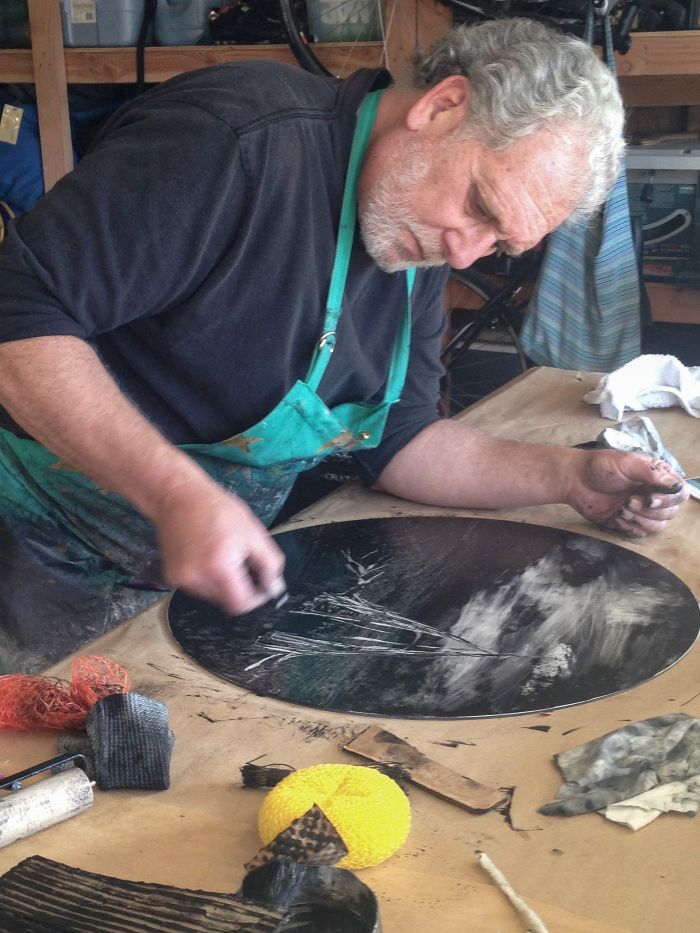
For Sonoma County artist Harry Frank, monoprints are a natural evolution of his work as a potter, painter, sculptor, and teacher. We asked Harry a few questions to learn more about the process of monoprinting and what inspires him to keep exploring this art form.
LL: Can you describe the process of making a monoprint?
HF: In creating a monoprint, layers of oily ink are rolled onto a plexiglass plate and an image is created by manipulating the ink in any number of ways.
The ink is very sensitive and easily records how it has been touched. Simple tools such as an old credit card, stiff brushes, rollers, rags, anything, can be used that might make an interesting mark.
When the image is complete, a sheet of printmaking paper is carefully placed on the plate then the paper and plate are passed through a press. The pressure forces the ink to transfer to the paper. The paper is pulled from the plate and the image is revealed. What results is a one-of-a-kind print: a monoprint.
LL: What draws you to making monoprints?
HF: Creating a monoprint encompasses pretty much everything I like about making art: it is spontaneous, gestural, and expressive. It is improvisational. It surprises me each and every time I work. I like the rhythm of printmaking and of working with the media of ink and paper.
LL: Where do you find inspiration for your images?
HF: Inspiration is all around us: in the green- or wheat-colored hills, in the sky, and in the changing daily light. It’s also in a conversation, or a poem, or found in a dream. The impetus to work can come from both within or without and finds expression in many ways. I work with landscape as a motif because it resides somewhere between representation and abstraction. I’m not a landscape painter per se, but I use the form to explore ideas.
LL: When you’re in your studio and preparing to work, do you have a plan for what you are going to create?
HF: I work both ways. Sometimes I’m working from the memory of a scene, or from a photo, usually of light and shadows. At other times, I begin with an idea and see what happens.
LL: How do people who purchase your work describe it? What do you think draws them to it?
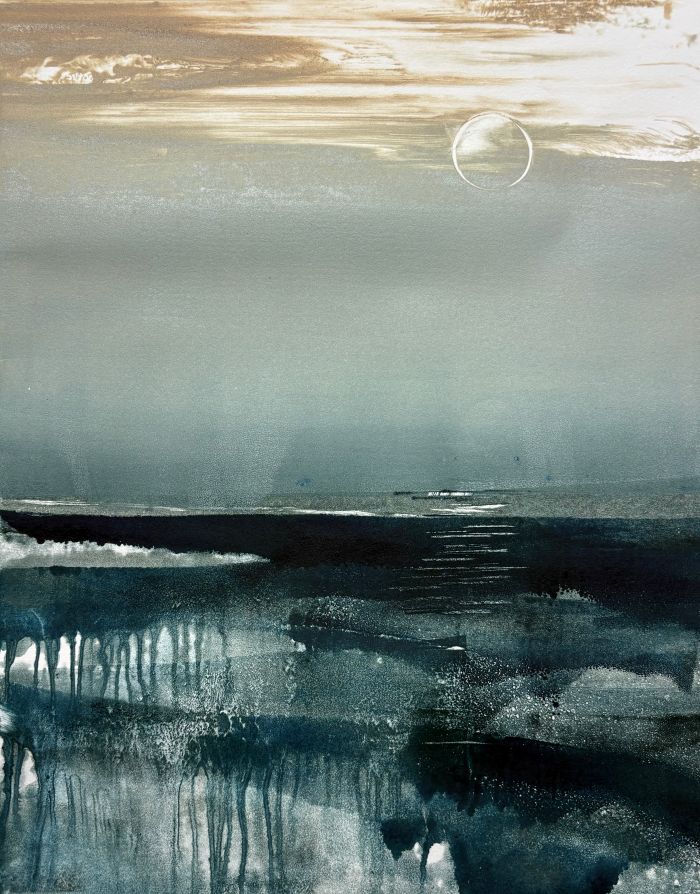
HF: I hope they are responding to something that can’t be precisely named because I’m most interested in images that contain some element of mystery. On the other hand, some of my prints appear photographic, and that can be compelling as well as confusing! I hope there is something that moves them because my aim is to evoke something. I want my prints to have an emotional undertone, something beneath the image so that it has depth.
LL: Where can we find your work?
HF: I’m a partner at the Graton Gallery and regularly have work on display. I’ll be showing new work at the gallery August 8-September 13, 2026 with fellow artist Sandra Rubin.
My work can also be found during Art Trails 2026 as well as the Sebastopol Center for the Arts and various gallery shows throughout the area.
I teach a weekend monoprint workshop at my studio. Dates for 2026 are forthcoming.
Please email me if you are interested.
411
The Graton Gallery
707-829-8912 | gratongallery.net
Art Trails Sonoma County
Sebastopol Center for the Arts
sebarts.org | 707-829-4797