
From Global Commodity to Local Staple
Photos by Paige Green
What comes to mind when you imagine your local farmers market? Those first sweet, hand-picked strawberries in April? The late summer arrival of apples, mounds of vibrant heirloom tomatoes? Even in winter colorful veggies greet the shopper.
Wandering past these familiar offerings 15 years ago, Mai Nguyen felt something was missing, as if locally grown food had been relegated to side dishes on the table. Because when Mai considered their own diet, one essential ingredient was nowhere to be found: grains.
Some local food evangelists consider grains to be the antithesis of the farmers market: an industrial monocrop, a global commodity, a glutinous vice so unwholesome that its once foundational place upon America’s food pyramid was, earlier this year, demoted to a small corner once reserved for sugar.
But for Mai, the problem isn’t grain; it’s how little we understand it. They’re on a mission to change that.
Mai’s family fled Vietnam for California after the war, refugees of a decades-long geopolitical struggle. Today, Vietnam carries a different global burden: it has become a destination for the world’s waste stream, absorbing trash exported by wealthier nations like the U.S. Confronting this reality—that there is no real “away” where garbage disappears—led Mai to a graduate program in Ontario, Canada, where they studied this often-invisible outsourcing, another downstream casualty of globalization.
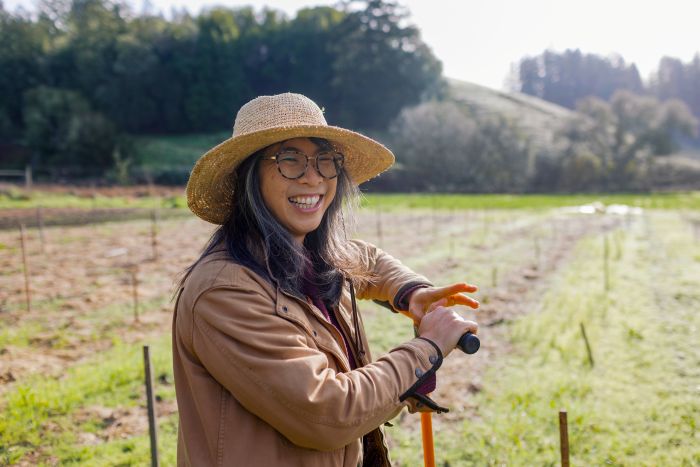
As a counterbalance to that heavy intellectual work, Mai helped start a cooperative café rooted in relationships with nearby farms. They made regular visits, worked alongside growers, and learned to raise grains alongside vegetables and livestock. There, Mai discovered not only a deep love for grains but a fascination with how a local food economy can function. Unlike the sprawling international commodities market, the heirloom grains grown on those small farms stayed close to home, nourishing neighbors not just with niche crops, but with the foundations of a complete diet. Mai was hooked.
After graduation, Mai returned home inspired to put their new skills and passion to work. But the days of California’s amber waves were long behind it. In the late nineteenth century, the state—including farms on the North Coast—grew three million acres of wheat, the second most in the country and enough to export around the world. Since then, production has plummeted as California agriculture shifted toward more lucrative crops like almonds, leaving the Midwest—or even other countries—to grow our staple foods.
Locally, that shift meant abandoning wheat fields for grapes. In a region where vineyards and high-end tasting rooms have proliferated, where a bag of imported flour costs a few dollars while a bottle of cabernet can fetch upwards of a hundred, sowing wheat can seem idealistic at best. So, the sight of Doug Mosel riding his combine outside Ukiah must have come as a surprise to other local farmers. Nevertheless, that’s exactly who Mai sought out.
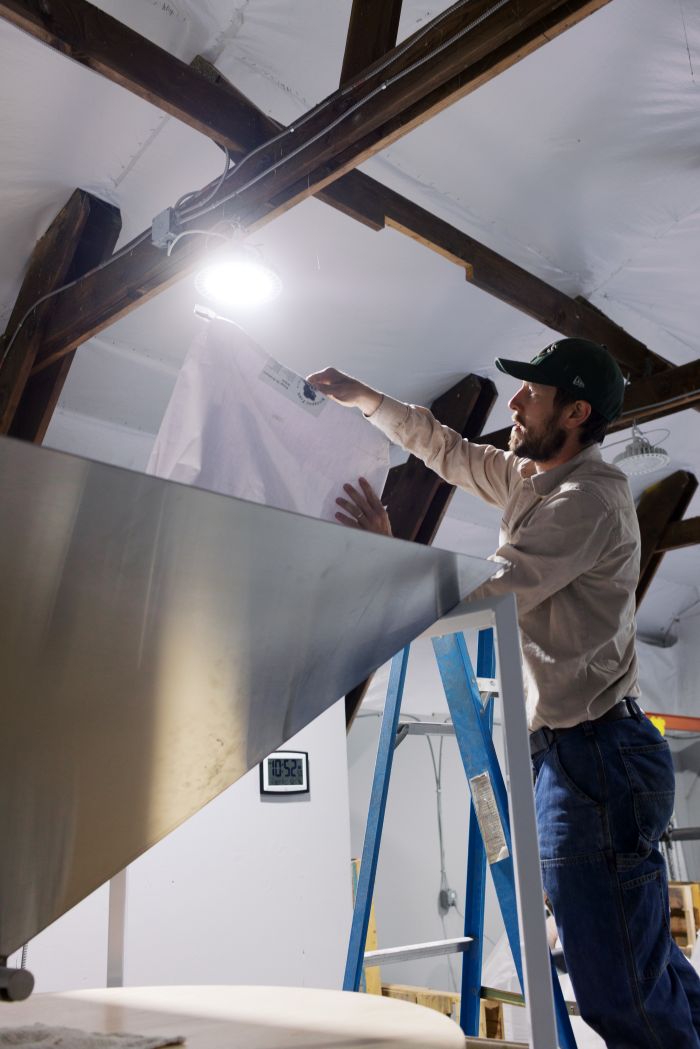
Founder of the Mendocino Grain Project, Doug also felt called to round out his local food shed with staple crops and, against the advice of experts, invested in equipment for growing, harvesting and milling flour. A kindred spirit, Mai became his first apprentice.
“It was exciting to be there at a time when the effort to grow heirloom grains in a local economy was still pretty new,” Mai recalls. “And the Mendocino Grain Project was, in a way, the epicenter of that conversation.”
Mai eventually landed in Sonoma County, leasing multiple parcels, setting up their own flour mill, and selling directly to customers.
In a world where most people belive flour comes in two varietes — white and whole wheat– Mai is a champion of diversity in all its forms.
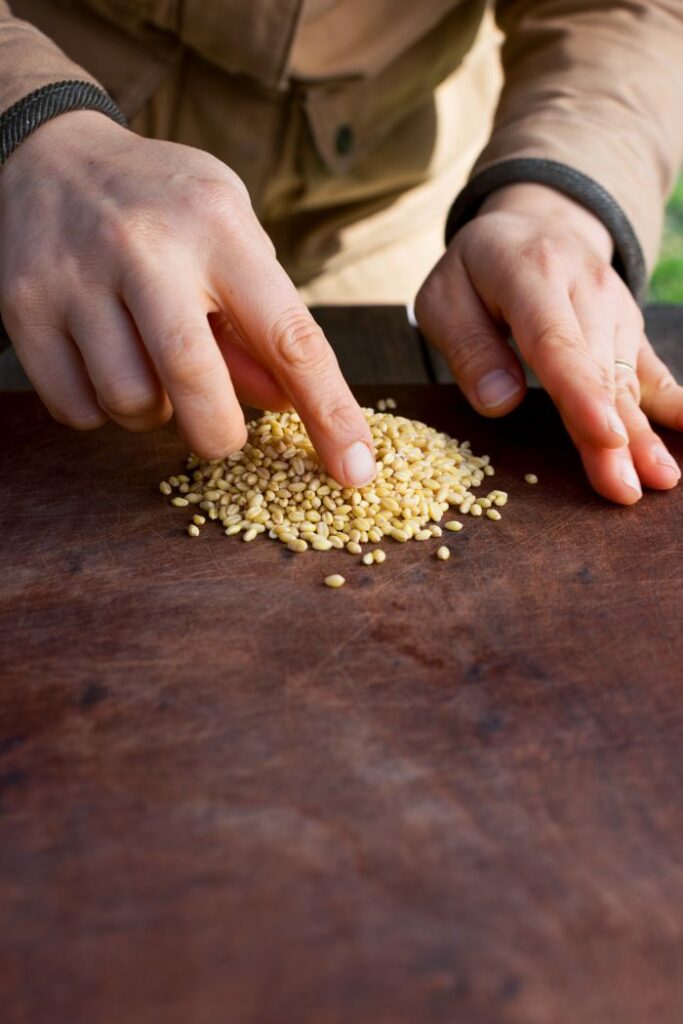
In a world where most people believe flour comes in two varieties—white and whole wheat—Mai is a champion of diversity in all its forms. Today, they grow a dozen heirloom varieties for commercial production, from Chiddam Blanc de Mars, a heritage wheat favored by French bakers, to Akmolinka, brought to the U.S. by a refugee from northern Afghanistan.
Beyond commercial production, Mai is also growing for posterity, sowing 178 non-commercial varieties to ensure future generations have access to genetic plant diversity. They carefully select seeds to develop climate-adapted strains. Until earlier this year, such work was widely understood as a matter of national food security, with similar programs run by the U.S. Department of Agriculture. But last March, DOGE—the Department of Government Efficiency—cut that program’s funding and fired most of its staff, making Mai’s grassroots efforts more vital than ever.
During those first few years in business, Mai’s enterprise wasn’t the only thing growing. A broader community of grain farmers, bakers, millers, brewers, and distillers began to take shape. In 2016, Mai and several collaborators launched the California Grain Campaign to raise awareness about their fast-sprouting movement.
Among their goals was educating a public growing wary of gluten and carbohydrates—often unaware of the difference between ultraprocessed, glyphosate-doused flour that might sit on a shelf for years and the fresh, organic, heirloom grains being grown locally.
Mai is clear that the aim was never to help California compete with Kansas or China, nor to return the state’s grain industry to its nineteenth-century peak. While acreage was higher then, land ownership was concentrated in the hands of a few wealthy wheat barons, more focused on profiting from global markets than serving local communities.
Instead, the California Grain Campaign set out to “take grains out of the worldwide commodity system and place them into a regional, sustainable food system.” The goal wasn’t simply to increase yields but to build a secure market for California-grown whole grains—an effort that required extensive consumer education.
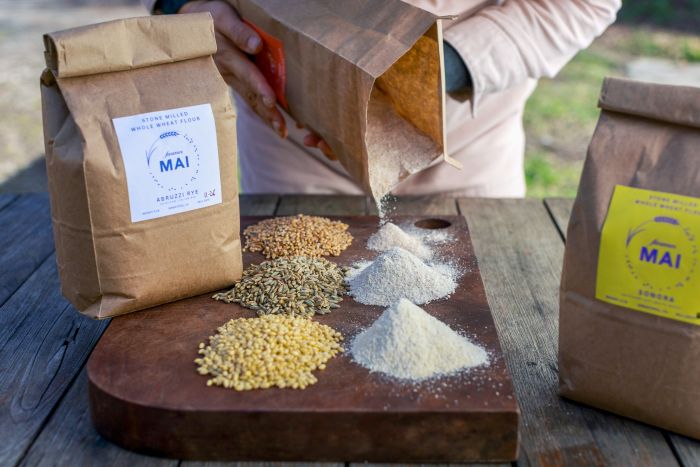
Together, the group published an annual California Grain Catalog; hosted educational events; provided resources for farmers food businesses, and consumers; and launched the 20 x ’20 Campaign. Working with farmers markets, they set a goal that by 2020, 20 percent of grain-based products sold would use locally grown whole grain. Or as they put it: “When you bite into a farmers market pretzel, at least 20 percent of it will be made with delicious, locally grown whole grain.”
What emerged was a clear need for a more complete supply chain—strengthening seed systems, delivery, milling, and processing infrastructure, and cultivating skilled workers in each area. Building that infrastructure has since become the campaign’s primary focus.
Despite Mai’s optimism, small-scale grain farmers today face steep challenges. Land costs are high, labor is scarce, infrastructure is expensive and difficult to access, and government subsidies overwhelmingly favor the largest producers—including a $12 billion bailout to make up for the president’s recent trade wars. Meanwhile, social media health gurus continue to flatten the story of grains into easy villains.
Farming is tough under any circumstances. For farmers from historically disadvantaged communities—those lacking land, financing, or connections—it can be tougher still. Mai’s commitment to diversity in agriculture, however, extends beyond wheat varieties. That commitment led them to found the Asian American Farmers Alliance, which focuses on sharing technical knowledge and increasing political representation, and to cofound the California Farmer Justice Collaborative.
In 2017, the collaborative helped pass the Farmer Equity Act, California’s first agricultural civil rights bill. The legislation formally acknowledged that many farmers and ranchers from historically marginalized racial, ethnic, and gender groups have faced systemic barriers to resources and affirmed the need to invest in their long-term success.
Until this year, Mai was contracted on multiple projects aimed at helping these under-resourced farmers gain a foothold. Those projects, too, were cut by DOGE. And more recently, the Farmer Equity Act itself came under attack by the new U.S. Secretary of Agriculture, who threatened California’s governor with legal action and accused such efforts of reverse discrimination.
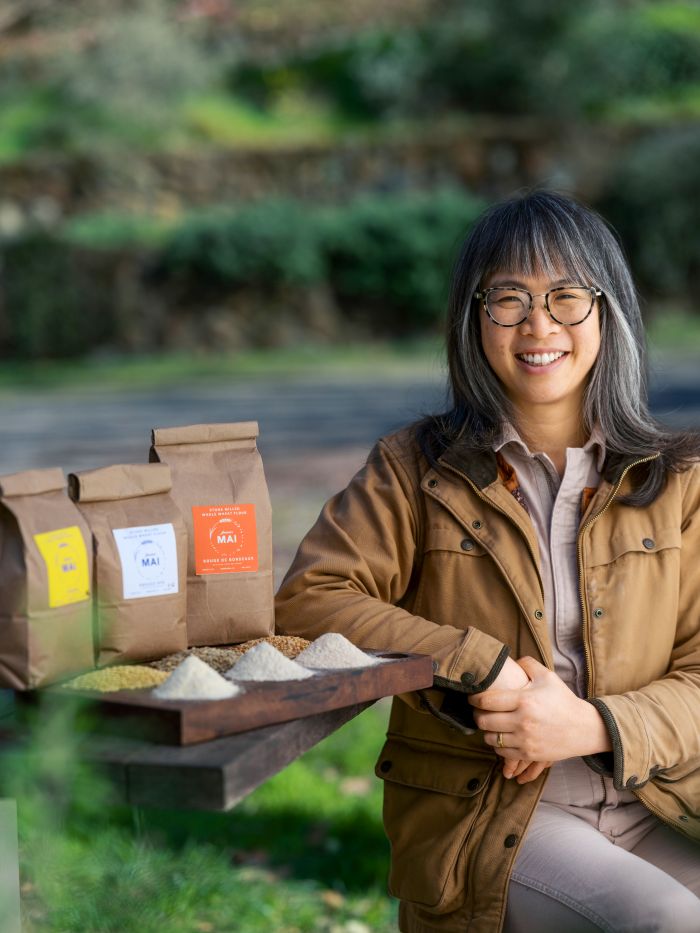
But Mai’s vision was never about replacement, advantage, or exclusion. Just as they don’t imagine a Sonoma County where grains replace grapes but rather one defined by “the integration of diverse cropping systems,” they also envision a farming community that better reflects California’s population—one where everyone has a chance to put down roots and where farming is a viable career no matter who you are or where you come from.
To grow the food system we need, Mai doesn’t believe we have to make compromises. Or, as they put it, “You can have your local, sustainable, flavorful, healthful, and socially just cake—and eat it too.”